
Pattern basics
When a quilt image is not a pattern yet
An image can be a marvelous spark. It can show color, mood, and a silhouette. It cannot reliably show every measurement, seam, or construction decision you need at the cutting table.
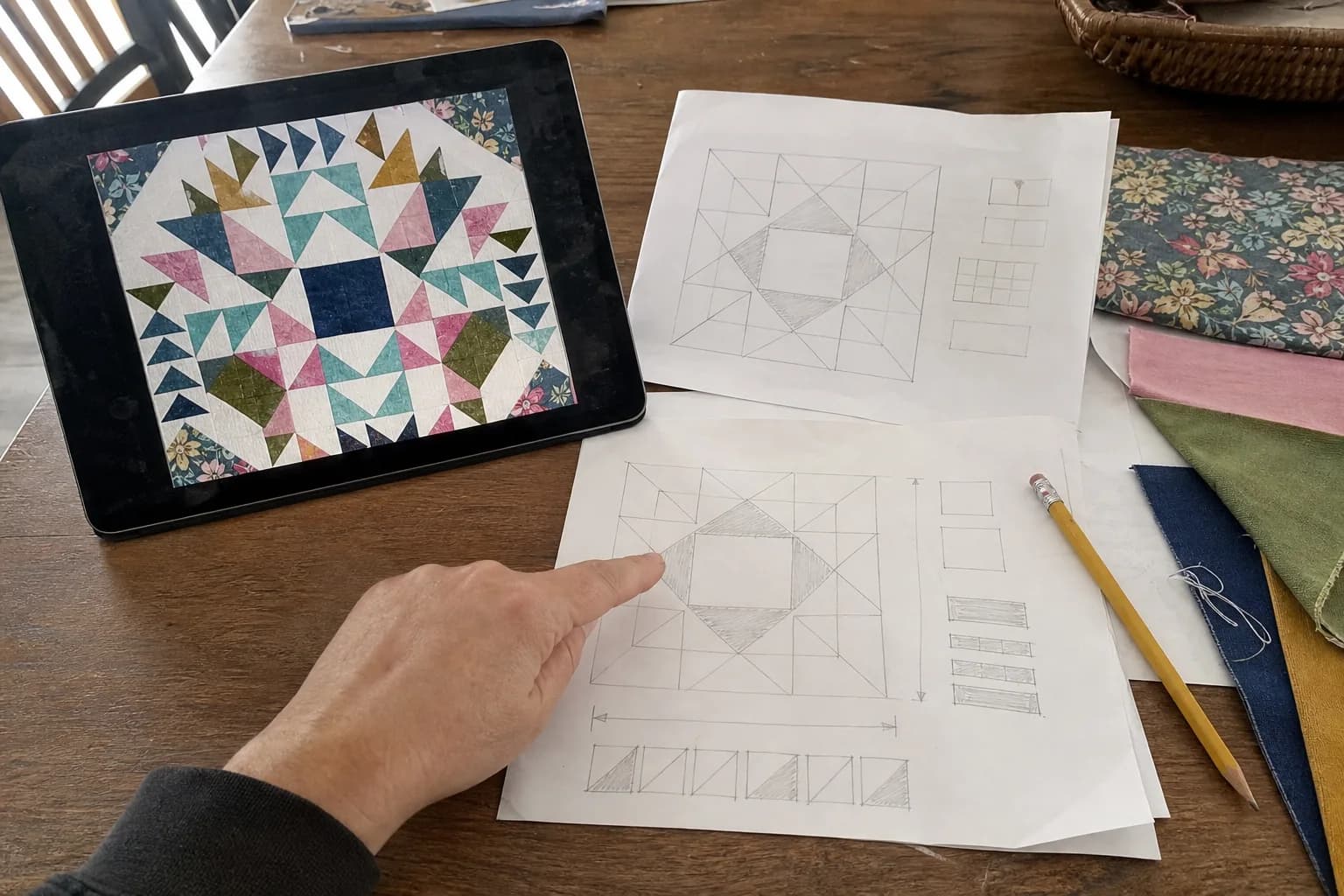
A picture is evidence of appearance, not construction
A photograph, rendering, or screenshot can tell you that a quilt has a dark border, a repeated star, a flower-like silhouette, or a row of blocks. It can help you notice where light and dark fabrics sit. It usually cannot tell you the finished measurement of a unit, the amount of fabric hidden in seam allowance, the order in which sections were sewn, or whether a visible line is a seam at all.
That distinction matters because two quilts can look similar and be made in entirely different ways. A curved petal might be appliqué, a pieced arc, or quilting lines on a whole-cloth top. An angular portrait may be a mosaic of fabric pieces, a printed panel, or a design sketch. A picture alone is a poor place to invent cutting instructions.
Use images for the decisions they can support
Images are useful for planning color, balance, and direction. You can circle a repeated block, count visible rows, notice rotations, and test whether a new background changes the overall feeling. Keep a note of what you actually see versus what you are assuming. “Three rows are visible” is an observation. “Each block finishes at 12 inches” is an assumption unless a source states it.
This habit makes collaboration clearer too. If you share a reference with a quilt friend or designer, ask specific questions: Which method makes this curve? Is this a border strip or a finished border width? Are the four corners the same block rotated? Good questions move a picture toward a plan without pretending it already is one.
Four labels that keep results honest
A clearer look at supplied pages or an image can help you inspect the design. An editable layout has been checked enough to plan with, so you can explore blocks and placements. A section has usable sewing instructions when its method, measurements, and original instructions agree. The whole project is ready to make only when its technique-specific instructions, print guidance, cutting information, and sewing order are complete. These distinctions answer different questions at the sewing table.
An editable layout can be genuinely valuable: it can show row order, repeated units, rotations, visible fabric placement, sashing, and borders before you change anything. It is still not permission to cut if the source does not provide a dimension or method. Missing facts should stay visibly unresolved rather than being filled in with a plausible-looking guess.
Image-to-plan questions
- What can I see directly: blocks, rows, colors, borders, or only a silhouette?
- What finished size, seam allowance, and construction method are still unknown?
- Which lines are definitely seams, and which might be decorative?
- Do I have permission to use the source pattern privately for planning?
- What is the smallest test that can answer the next construction question?
Do not let a tidy screen output over-promise
Digital organization can make an image much easier to understand, especially when a quilt has repeated blocks or a busy fabric plan. That clarity is useful. It does not turn screen output into construction-ready directions. A layout check can confirm what is visibly present and allow planning changes, while cutting measurements, technique instructions, and print scale still require their own evidence.
If you have a pattern you own or are allowed to use, keep the source private while you plan your version. Do not treat a conversion as a public pattern library or a replacement for the designer's document. If something in the source is too small, decorative, or ambiguous to read, leave it as a reference rather than calling it a verified block.
Take the next honest step
When you have a complete pattern, use the pre-cut check. When you have only an idea, choose a technique that fits the shapes and make a small, clearly scoped sample. And when you have an editable plan, read what an editable quilt layout is and is not before treating it as a making packet.
The questions that come up next
Common questions
Can an image help me plan a quilt?
Yes. It can help you discuss color placement, repeated blocks, borders, and the overall feel you want. Treat it as a reference while you gather the measurements and method from a pattern or your own deliberate draft.
Does a layout grid prove the pieces are ready to cut?
No. A clear grid can help you plan, but it does not establish seam allowance, cutting measurements, quantities, or a technique-specific assembly order.
What should I do if I cannot identify the construction method?
Do not infer it from the artwork. Look for the original instructions or decide on a method through a fresh, fully specified design process before cutting fabric.
Keep the project moving