
Pattern basics
A quilt picture is not yet a quilt pattern
A picture can be a wonderful starting point. It can show color, mood, and the quilt you hope to make. A pattern does a different job: it tells you how to get there.
See how Stitchtale checks a plan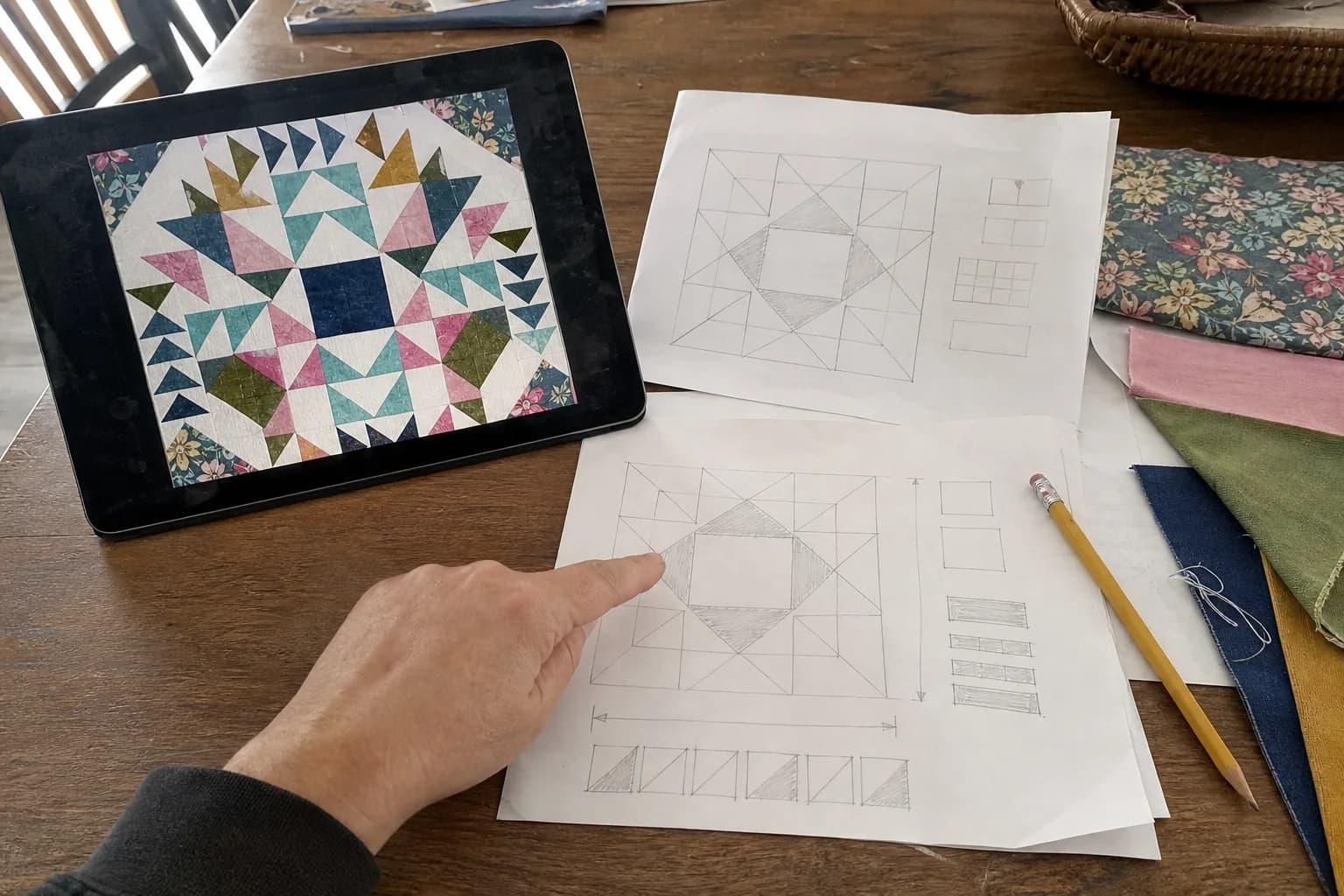
At the cutting table
What to notice first
- What an image can show
- What a usable pattern adds
- Questions worth asking before fabric shopping
- Where to test a new design
A picture answers “what could this look like?”
A quilt picture can help you fall in love with an idea. You can see a star, a flower, a beloved photo, a palette, or a layout that catches your eye. That is valuable, but it is only the beginning of the making work.
Pictures often hide the practical details. You cannot reliably see the finished size, the width of a border, which seams are doing the work, or whether two shapes are separate pieces or simply a line in the artwork.
A pattern answers “how do I make it?”
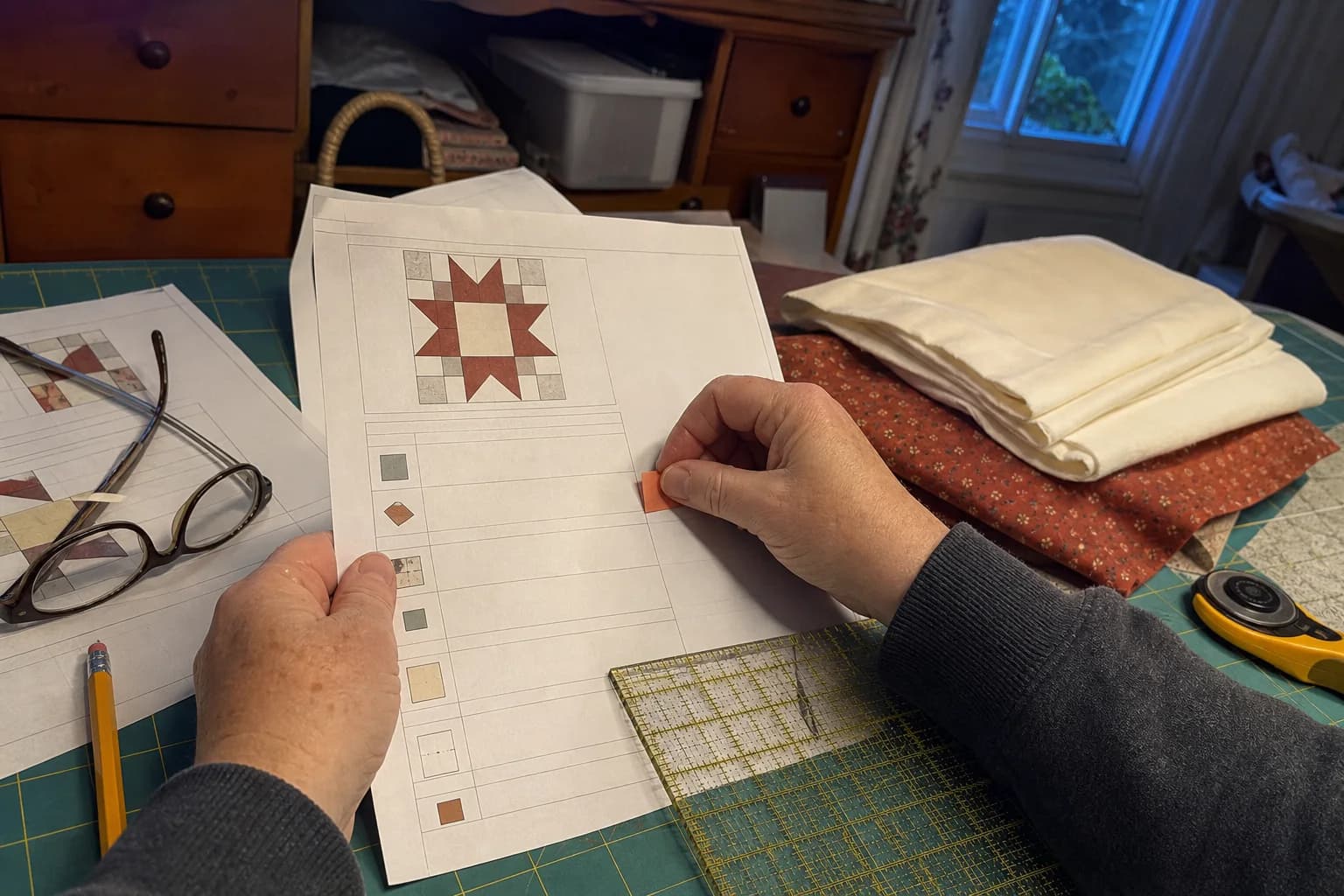
A usable pattern turns the visual idea into decisions you can take to the sewing table. The exact format varies by technique, but a maker should be able to find the finished measurements, a fabric or color key, cutting or template information, and a sensible assembly order.
For example, a drawing may show a row of flying geese. A pattern needs to tell you the finished size of each unit, how many to make, which fabrics go where, and how those units join the next part of the quilt.
What to ask before you buy fabric
- What is the finished size of the quilt and of the repeated block, if there is one?
- Which technique does the pattern expect: rotary cutting, templates, foundation paper piecing, appliqué, or something else?
- Can I see the cutting list, template pages, or a sample instruction page before I begin?
- Is there a fabric key that makes it clear where each fabric belongs?
If a pattern cannot yet answer those questions, it may still be a lovely design idea. Treat it as an idea to develop, rather than proof that it is ready to cut.
Use a small test to reduce surprises
When possible, make one block or one small section from inexpensive fabric first. Compare it with the stated measurement, check whether the instructions make sense in your hands, and notice whether your chosen fabrics have enough contrast. A small test is not a guarantee, but it is a kinder place to find a problem than halfway through a quilt top.
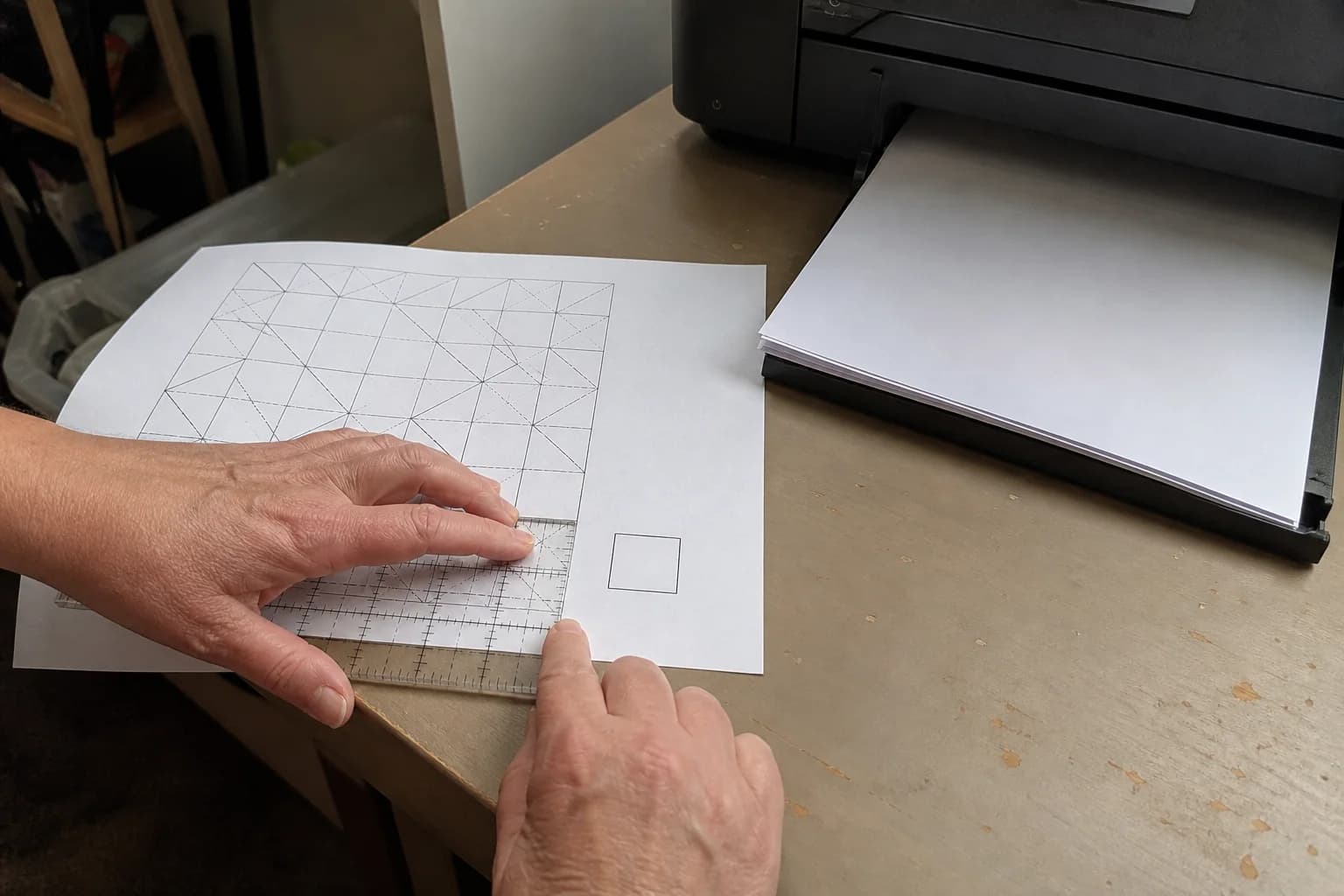
Next, use this before-cutting checklist and, for template patterns, confirm your print scale.
The questions that come up next
Common questions
Can I make a quilt from a picture alone?
Sometimes, especially if you are comfortable drafting as you go. But a picture does not usually tell you exact sizes, seam allowances, fabric amounts, or the order to assemble the pieces. Write down those decisions before cutting good fabric.
Does every pattern need full-size templates?
No. Some patterns use rotary-cut measurements, some use foundation papers, and some use templates. What matters is that the pattern clearly tells you which method it uses and gives you the information needed for that method.
What should I test first when trying a new pattern?
A single block or a small section is a sensible place to start. It lets you check the instructions, seam allowance, fabric contrast, and finished size before you commit more fabric.
Quilt math, without the second-guessing
One short email when a new guide or calculator lands. No sales sequence.
You're agreeing to quilt-math emails from Stitchtale. Unsubscribe any time; this is separate from signing in.