
Fabric planning
Should you prewash quilting fabric? Make a project-specific choice
Prewashing is one of those quilting choices that can sound like a rule until you hear three quilters give three sensible reasons for doing it differently. The useful answer belongs to your fabric pull and your project.
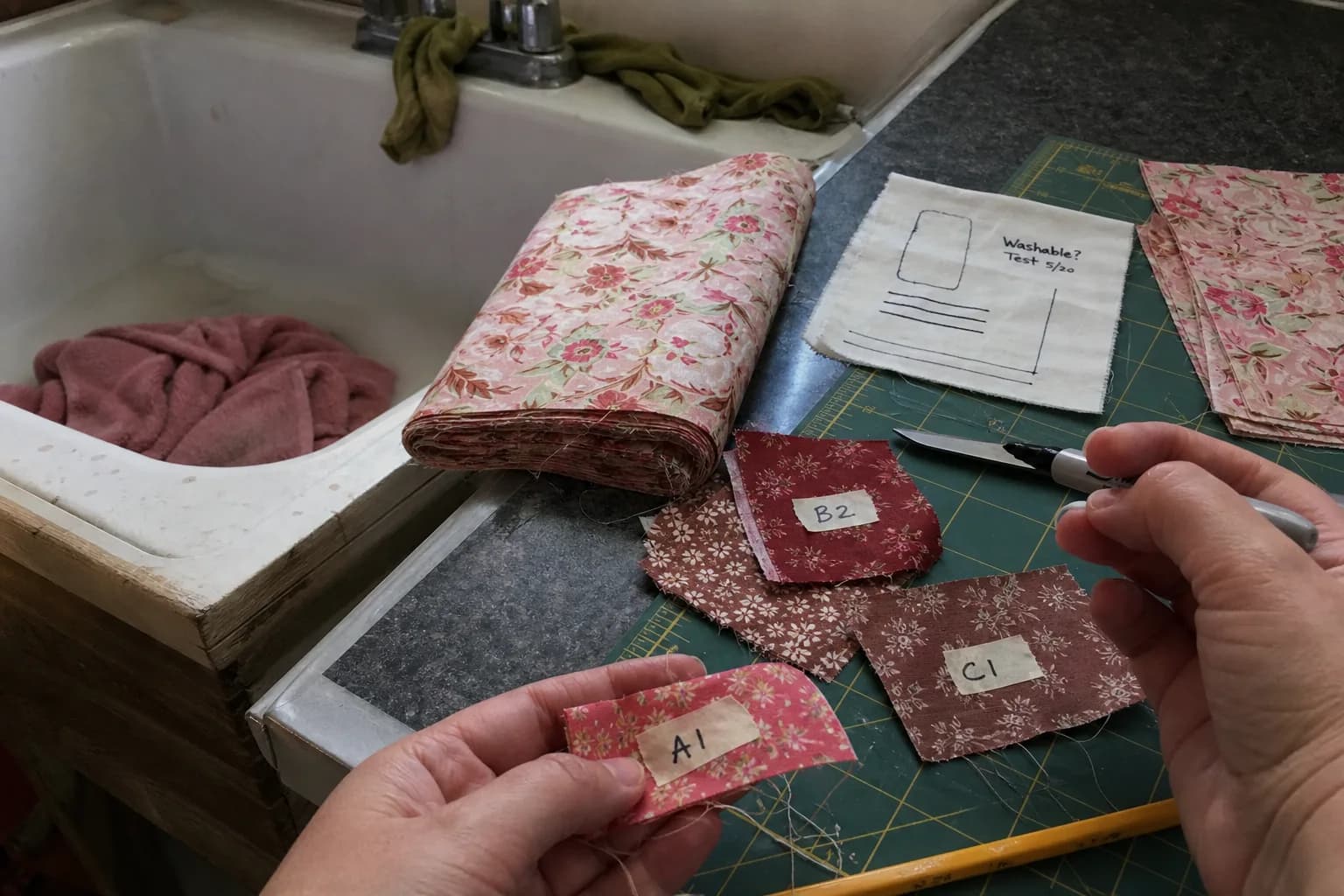
At the cutting table
What to notice first
- What prewashing can change
- Reasons to prewash or skip it
- A fabric-pull decision check
- How to stay consistent
Prewashing is a planning decision, not a badge of virtue
Some quilters prewash every fabric before it reaches the cutting mat. Others prefer the feel and handling of unwashed fabric, especially when they are following a pattern or working with a coordinated pull. Both approaches can be thoughtful. Trouble usually starts when fabrics that have been handled differently are mixed without a plan.
Prewashing can affect shrinkage, texture, finish, and fraying at the raw edge. It can also be part of a care plan when you are concerned about color transfer. Skipping it preserves the fabric as purchased and may make starching or cutting feel more familiar to you. These are tradeoffs, not a pass-fail quiz.
Start with the whole project
Look at the fabric type, the pattern, batting and backing plans, and the way the quilt is likely to be used and washed. If the pattern, kit, or fabric manufacturer gives care guidance, let that specific information lead. A quilt that mixes old stash fabric, new dark solids, linen, or another fiber deserves a more careful pause than a pull of similar quilting cottons.
Do not assume a fabric is colorfast or that it will shrink a particular amount because it is dark, expensive, or from a familiar line. If the risk matters to your project, check the maker's guidance and test a small piece rather than turning a hunch into a universal claim.
Worktable checklist: choose once, write it down
- Read the pattern, kit, and fabric-care information for anything project-specific.
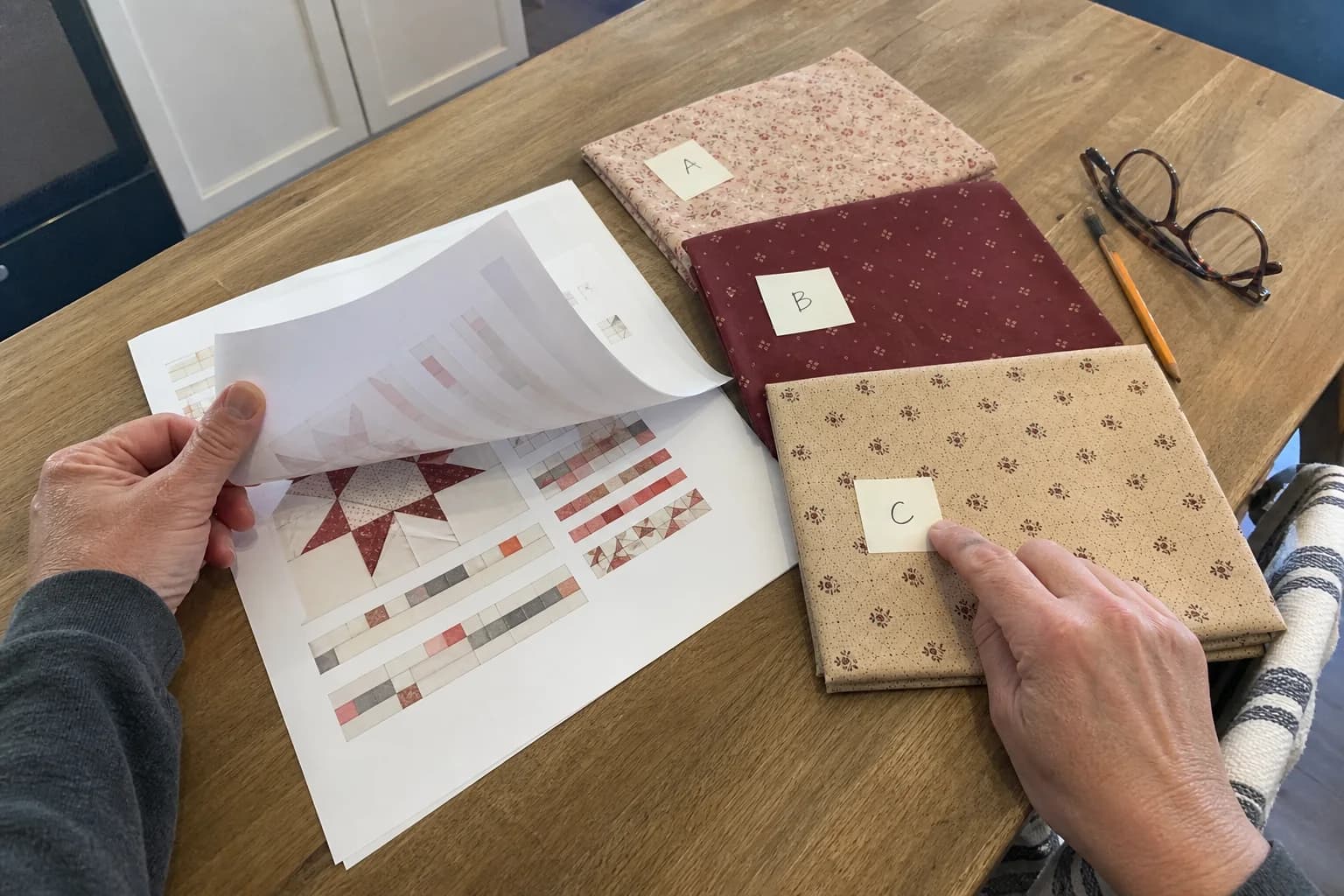
- List the fibers and the unusual pieces in your pull, such as hand-dyes, dark contrasts, vintage fabric, or linen blends.
- Decide whether you will prewash all, none, or a defined group before cutting.
- If color transfer is a concern, test a small piece using the care approach you plan to use.
- Record the choice with the project so a later fabric purchase is handled the same way.
For example, a throw quilt made from a new coordinated cotton collection may lead you to skip prewashing and follow the care instructions when the quilt is finished. A light background paired with an unfamiliar saturated red from stash may lead you to investigate that particular fabric before it touches all those pale pieces. The decision is not “red is bad.” It is “this pull needs a check.”
Consistency makes construction easier
Once the fabric is cut, it is difficult to change course. A mix of washed and unwashed pieces may not behave the way you expected after the finished quilt is laundered. Whatever route you choose, use the same approach for fabrics that will be pieced together unless you have a specific reason and clear guidance to do otherwise.
Prewashing can leave soft, frayed edges. If you choose it, handle those edges in a way that keeps the pieces identifiable and ready for your own cutting method. Do not rush to square or trim fabric before you know the pattern's requirements and usable width. The cutting-instructions guide is a useful stop before the rotary cutter comes out.
Keep the choice proportional
Prewashing cannot promise a trouble-free quilt, and skipping it does not doom a quilt. It is one part of a larger chain that includes fabric selection, cutting, seam allowance, pressing, batting, backing, and care. Make the best project-specific call you can, then move on to the next real decision.
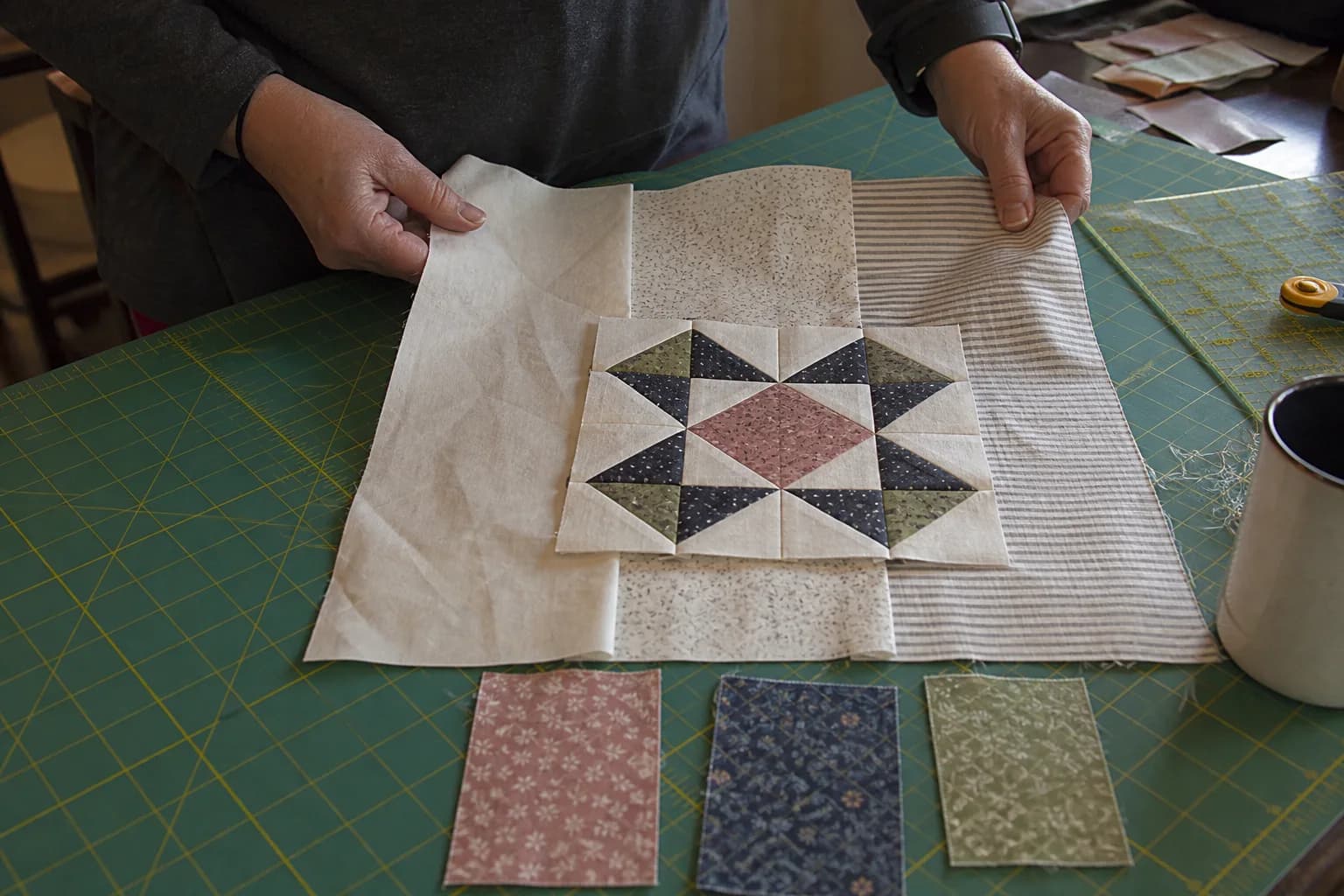
Before cutting a mixed pull, use a small swatch arrangement to check value and print scale too. The grayscale fabric check can catch a contrast issue while the fabric is still in a forgiving state. That is the kind of pause that earns its place at the table.
The questions that come up next
Common questions
Do I have to prewash quilting cotton?
No universal rule fits every project. Make a choice based on the fabric, the intended use, and any manufacturer or pattern guidance, then handle the pull consistently.
Can prewashing affect fabric size?
It can affect shrinkage, texture, and edge fraying. That is one reason to decide before cutting and piecing.
What if I am worried about a dark fabric bleeding?
Follow the fabric maker's care guidance and consider testing a small piece before it joins a light quilt. Do not rely on an assumption from the color alone.
Quilt math, without the second-guessing
One short email when a new guide or calculator lands. No sales sequence.
You're agreeing to quilt-math emails from Stitchtale. Unsubscribe any time; this is separate from signing in.