
Fabric planning
Directional fabric in quilt patterns: plan the print before cutting
Birds, houses, words, stripes, and one-way florals can make a quilt feel wonderfully specific. They also ask one extra question at every cut: which way is up after this piece is sewn?
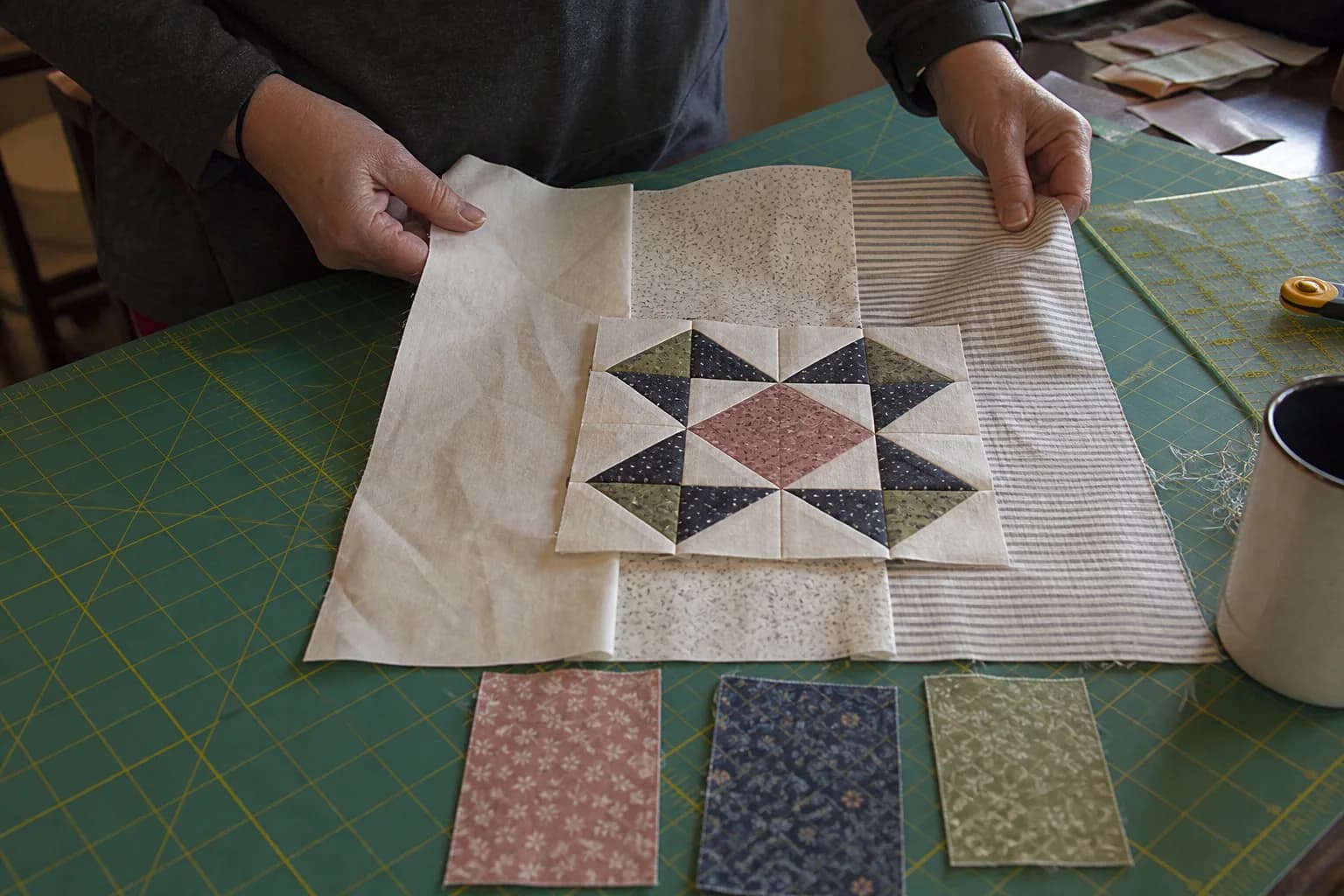
First, decide whether “up” matters to you
Directional fabric is fabric with a clear orientation: a line of houses, upright animals, letters, trees, stripes, or a floral that looks wrong when it is upside down. A pattern can still use it, but a rotated block may rotate the motif with it. That may look playful, or it may be the thing you cannot unsee after the quilt is finished.
Before treating the print as a substitute, look at the block diagram and the construction sequence. Repeated blocks may rotate, mirror, or turn in different directions. A simple square-in-a-square may keep a motif upright more easily than a block built from triangles whose orientation changes around the quilt.
Mark a true top while fabric is still whole
Once fabric becomes stacks of rectangles and triangles, its direction is harder to recover. Mark the intended top on the wrong side or on a removable label at the edge before you cut. Use a mark you can recognize at a glance, such as an arrow on the selvage-side edge. Keep it out of the seam allowance only if your marking method requires that.
Do a dry layout with a few cut pieces before chain piecing. Place the units in their finished positions, step back, and check the motifs. This is especially important for blocks that appear in alternating rotations. A five-minute layout on the mat can save a much longer conversation with the seam ripper.
Worktable test: one block, all the expected rotations
- Cut scraps for one block from the directional fabric and the background.
- Lay out the block exactly as the pattern diagram shows.
- Make a second paper layout for each rotation the quilt will use.
- Check whether the motifs remain upright, become sideways, or turn upside down.
- Choose: embrace the rotation, change the fabric role, alter the layout only if the pattern supports it, or choose another print.
Imagine a quilt with four-pinwheel blocks that rotate around a center. A print with tiny bicycles may face every direction in the pinwheels. If you like the motion, carry on. If you want upright bicycles, reserve that print for an unrotated border or center and use a non-directional fabric for the pinwheel blades.
Cutting direction and yardage are connected
A pattern's yardage assumes a particular cutting plan. A one-way print may need a different layout on the fabric to keep motifs oriented, especially for borders, long strips, fussy-cut centers, or matching a large repeat. Do not quietly assume that a directional substitute takes exactly the same amount as a small all-over print. Read the cut list and consider a test layout with paper rectangles before buying.
Also check the usable width of the actual fabric. Selvages, print placement near the edge, and a planned motif position can reduce the useful area. The fabric yardage guide keeps those questions separate from backing and binding calculations.
Direction is part of the assembly note
Write “top toward border” or “tree tops toward block center” on the project note. Keep the label with the cut stacks. When you press and trim units, return them to the same labeled group. This is not fussy bookkeeping for its own sake. It protects a design decision that can disappear after one rotation at the sewing machine.
For backing, orientation deserves its own planning pass because panel seams can turn a print sideways or upside down. See how to plan quilt backing before cutting directional backing panels. If you are sending the quilt to a longarmer, add the intended top to the preparation note and ask which backing orientation and seam plan they prefer. The principle stays simple: make direction visible before the first irreversible cut.
The questions that come up next
Common questions
Can directional fabric be used in any quilt pattern?
Often, but some blocks rotate or flip pieces so the motif will not all face one way. Check the pattern construction and decide whether that effect is acceptable before cutting.
Do I always need extra yardage?
Not always. Direction, repeat, fussy cutting, and the pattern's cut list can change the plan, so verify those details rather than applying a universal extra.
What counts as directional fabric?
Any print with an obvious intended orientation, including text, animals, houses, stripes, trees, and many florals.
Keep the project moving