
Before cutting
Five things a pattern should tell you before you cut fabric
Before the rotary cutter comes out, pause long enough to make sure the pattern gives you a workable plan. These five answers are a useful starting place for many quilt patterns.
Plan the finishing fabric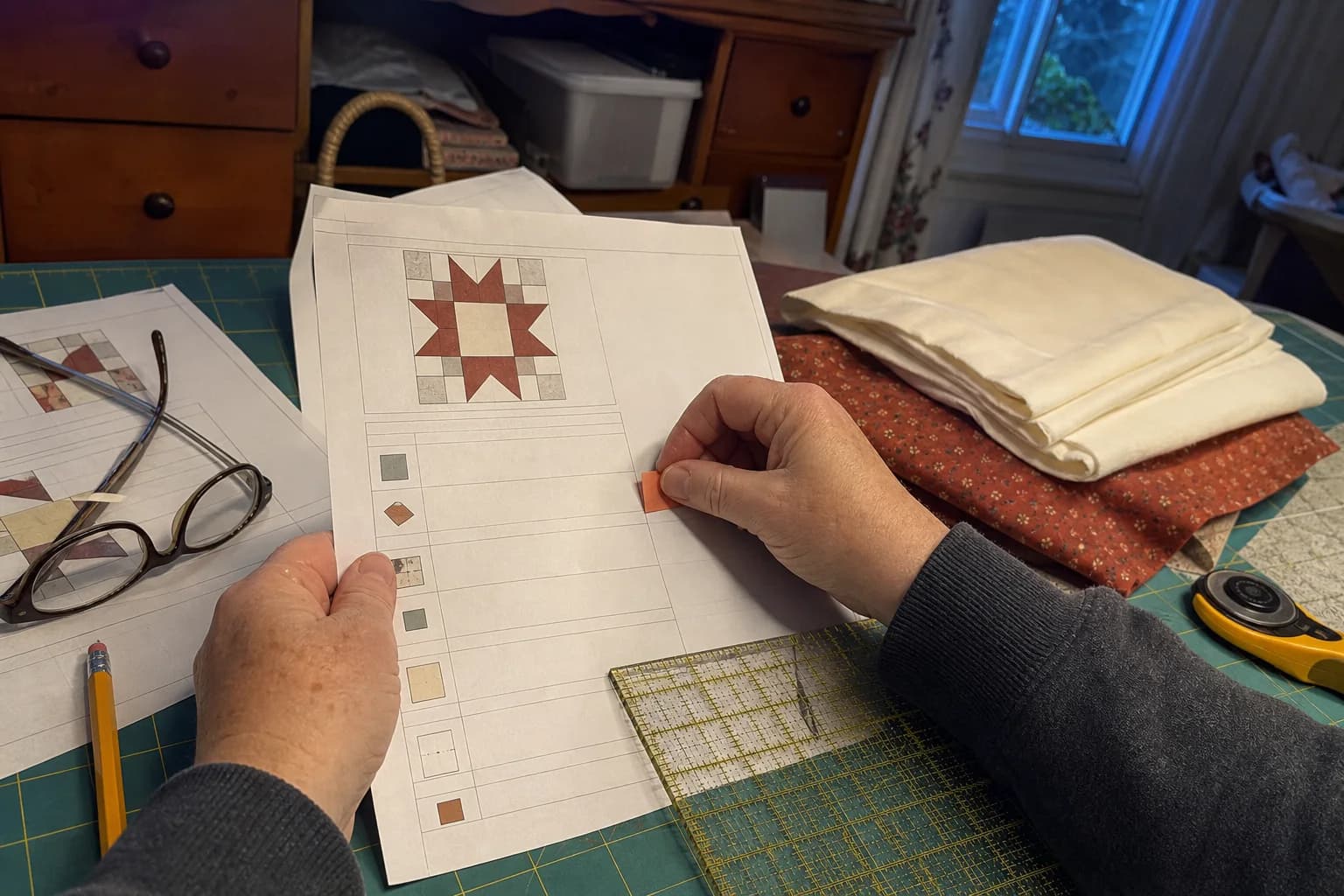
At the cutting table
What to notice first
- The finished size to look for
- How to find the required technique
- Why a fabric key matters
- When a test block is worth the time
1. The finished size
Look for the finished quilt size, not just a pretty cover photo. If the pattern is block-based, it also helps to know the finished block size and the number of blocks. Those measurements let you check whether the layout adds up and whether the quilt suits the bed, wall, or lap you have in mind.
2. The technique and seam allowance
Patterns are made in different ways. A pattern may use rotary-cut pieces, templates, foundation paper piecing, appliqué, or a mix. It should name the technique and state the seam allowance where that matters. Do not assume a template page includes seam allowance unless the instructions say so.
3. A fabric plan you can follow
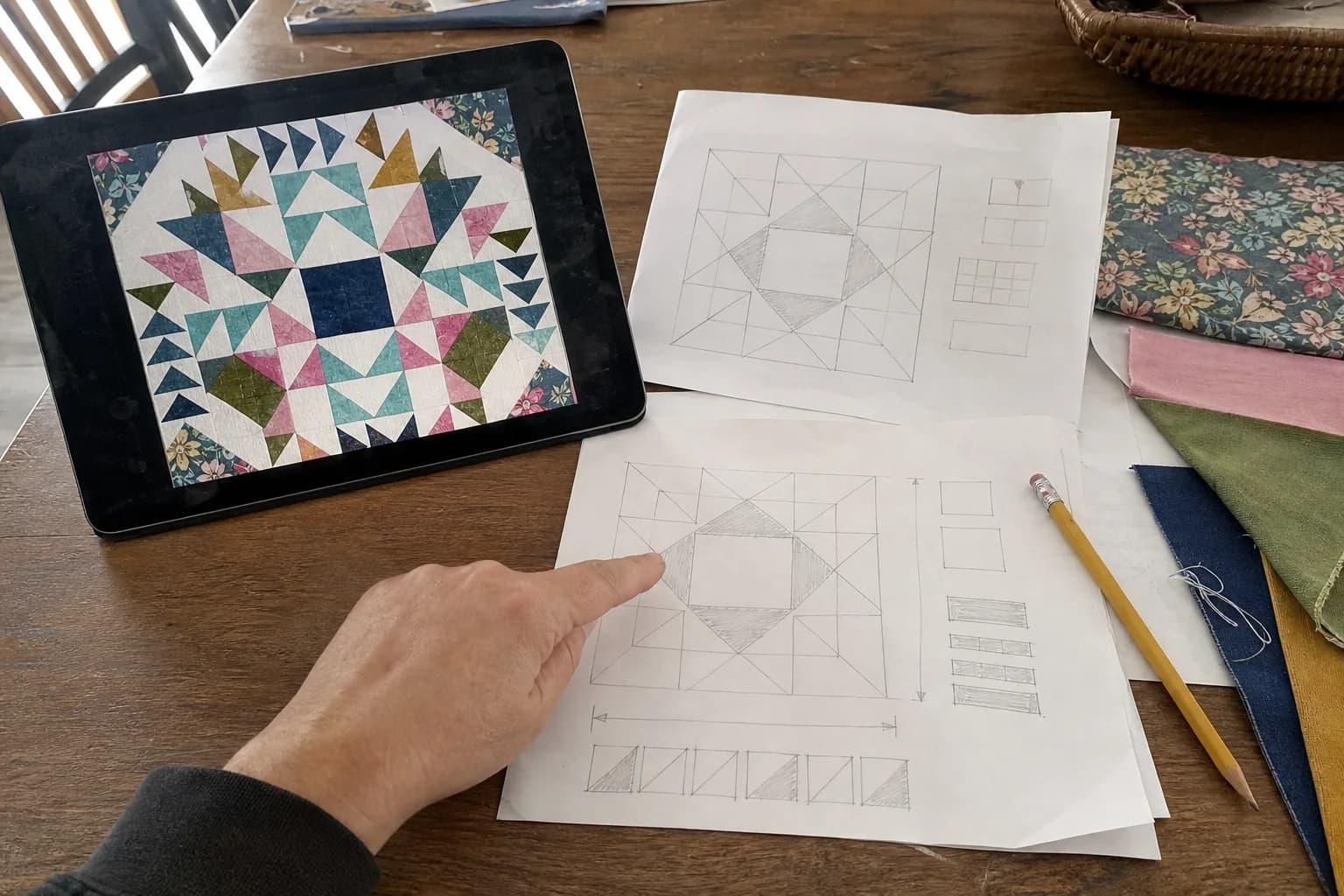
You should be able to tell which fabric goes in each part of the design. That might be a numbered fabric key, a color diagram, or labeled cutting instructions. The plan does not need to dictate your exact fabrics, but it should make placement clear enough that you are not guessing after the pieces are cut.
4. Cutting or template information
Before cutting, find the page that gives dimensions, quantities, and labels for each piece. If the pattern uses templates, check whether they must be printed at full size. If it uses rotary cutting, look for a clear list of widths, lengths, and counts.
5. An assembly order
A useful pattern does not only list pieces; it gives them an order. You should be able to see which units are made first, how blocks are joined, and when borders, backing, and binding enter the project. A small diagram beside the written steps can make a large difference.
A gentle stop sign
If several of these answers are missing, do not force yourself to begin. Ask the designer, look for an errata page, or make a sample only after you have filled in the missing information. That pause can protect fabric, time, and enthusiasm.
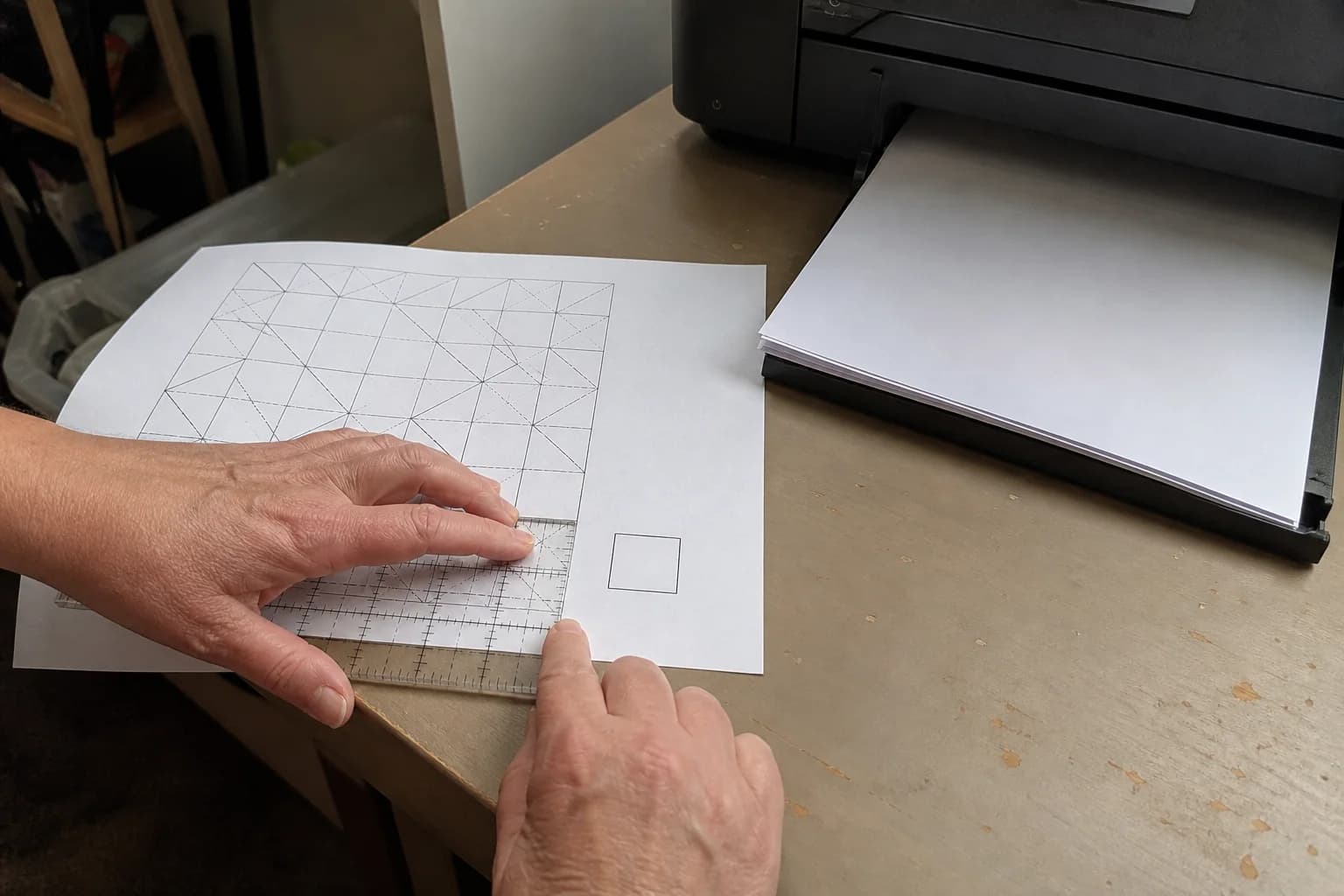
When the pattern uses printed templates, follow the 100% scale-box check before you cut the paper.
The questions that come up next
Common questions
What if the pattern does not state a finished size?
Set it aside until you can confirm the measurement with the designer or a trusted source. A layout picture can be misleading, especially when borders or sashing are involved.
Should I prewash fabric before cutting?
That is a personal and project-specific choice. Follow the pattern if it gives directions, consider the fabric manufacturer’s care guidance, and use a method you trust for fabrics that may bleed or shrink.
Do I need to make a test block every time?
Not always. A test block is especially helpful for an unfamiliar technique, a new pattern designer, a precise block, or fabrics you would rather not waste.
Quilt math, without the second-guessing
One short email when a new guide or calculator lands. No sales sequence.
You're agreeing to quilt-math emails from Stitchtale. Unsubscribe any time; this is separate from signing in.