
Finishing
How to measure a quilt before binding
Binding math is only as good as the dimensions underneath it. Measure after the quilt is in the state you intend to bind: borders attached, quilting complete, and any planned trimming decided.
Plan binding from the final size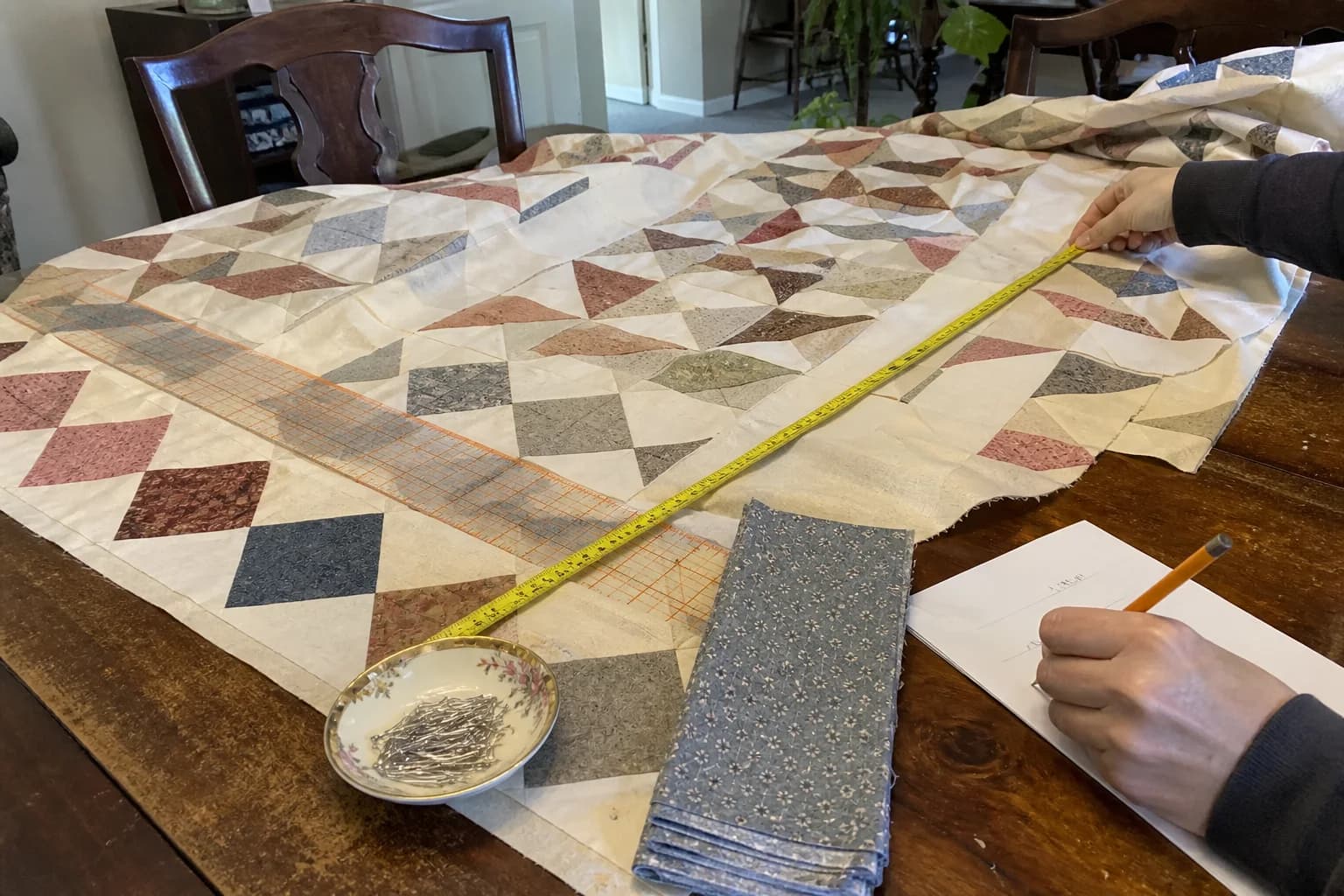
At the cutting table
What to notice first
- When to measure
- How to record width and length
- Why perimeter matters
- A finishing checklist
Measure the quilt you have, not the quilt you started
Before binding, lay the quilt flat without pulling it taut. Measure the width across the finished edge and the length from top edge to bottom edge. If you intend to trim after quilting, trim or establish that trim line first. A pre-quilting top measurement can be useful for planning, but it is not automatically the final binding measurement.
Use a tape measure or ruler you trust and write down both numbers immediately. It sounds fussy, but a notebook entry prevents a surprising amount of second guessing when you are standing at the fabric shelf.
Check more than one place
Measure width near the top, middle, and bottom; measure length near the left, center, and right. You are not hunting for a perfect number to force into the calculation. You are looking for the actual edge you will bind. If readings are materially different, pause. Check whether the quilt is lying flat, whether the edges need squaring, and whether the difference comes from a planned shape or an unintended one.
Worked example
Suppose the measured width is 59½ inches and the length is 79¾ inches after trimming. The perimeter is 278½ inches: add 59½ and 79¾, then multiply by two. Keep fractions or decimals in the note rather than rounding down early. The binding calculator can use the dimensions to show its strip and yardage working.
- Measure after the final trim decision.
- Record width and length with the same unit.
- Check readings in several positions.
- Calculate perimeter only after the edge is settled.
Leave room for the method
The perimeter does not include every part of a binding plan. Corners and joined strips use additional length, and the right allowance depends on the stated method. A calculator can show the allowance it uses. If your pattern gives a specific binding procedure, keep that instruction beside the calculation rather than replacing it with a generic number.
A final-edge checklist
- Confirm borders and quilting are complete.
- Decide whether you will trim and square up.
- Lay the quilt flat and measure both directions in several places.
- Write the final width and length, then calculate perimeter.
- Use the stated strip width and usable fabric width when planning binding.
If the edge has not been trimmed or seems out of square, read how to square up a quilt before cutting the binding.
Measure once more after moving the quilt
Before cutting binding, reposition the quilt and take one confirming width and length measurement. If the numbers agree with your note, you have a dependable perimeter to take into the binding calculation.
The questions that come up next
Common questions
Should I measure before or after quilting?
Measure in the state you will bind. Quilting and trimming can change the edge you need to cover.
What if opposite sides differ?
Pause and inspect before binding. A difference can be a sign to recheck squareness, the intended trim line, or the measurement.
Do I need a perimeter measurement?
Yes for binding yardage. Calculate it from the measured width and length after you have settled the final edge.
Quilt math, without the second-guessing
One short email when a new guide or calculator lands. No sales sequence.
You're agreeing to quilt-math emails from Stitchtale. Unsubscribe any time; this is separate from signing in.