
Quilt math
How much batting do I need for a quilt?
Batting is bought for a larger rectangle than the finished quilt top. Begin with the top's finished measurements, add the extra room your project needs on all sides, then compare that rectangle with a real package or roll width.
Calculate your batting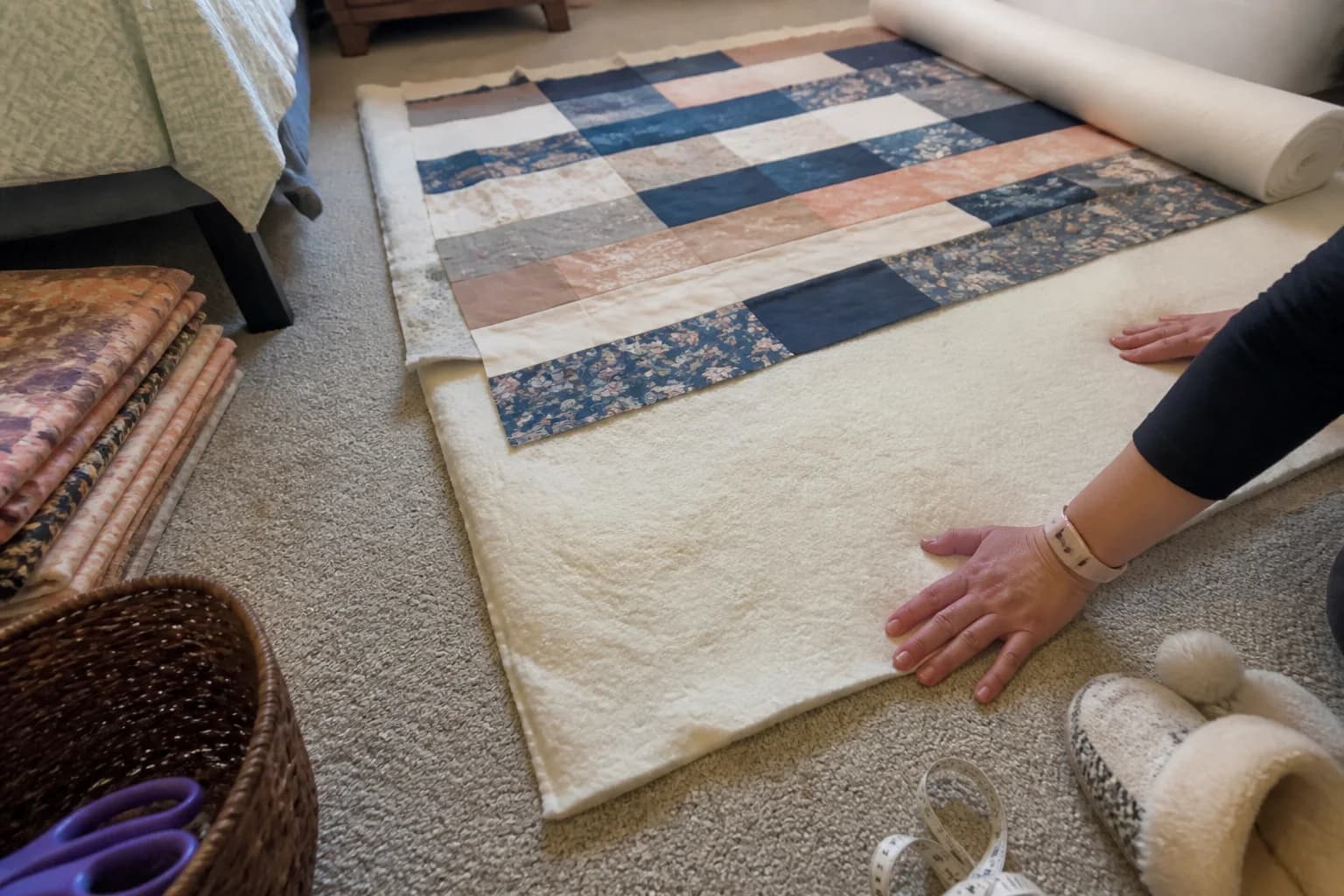
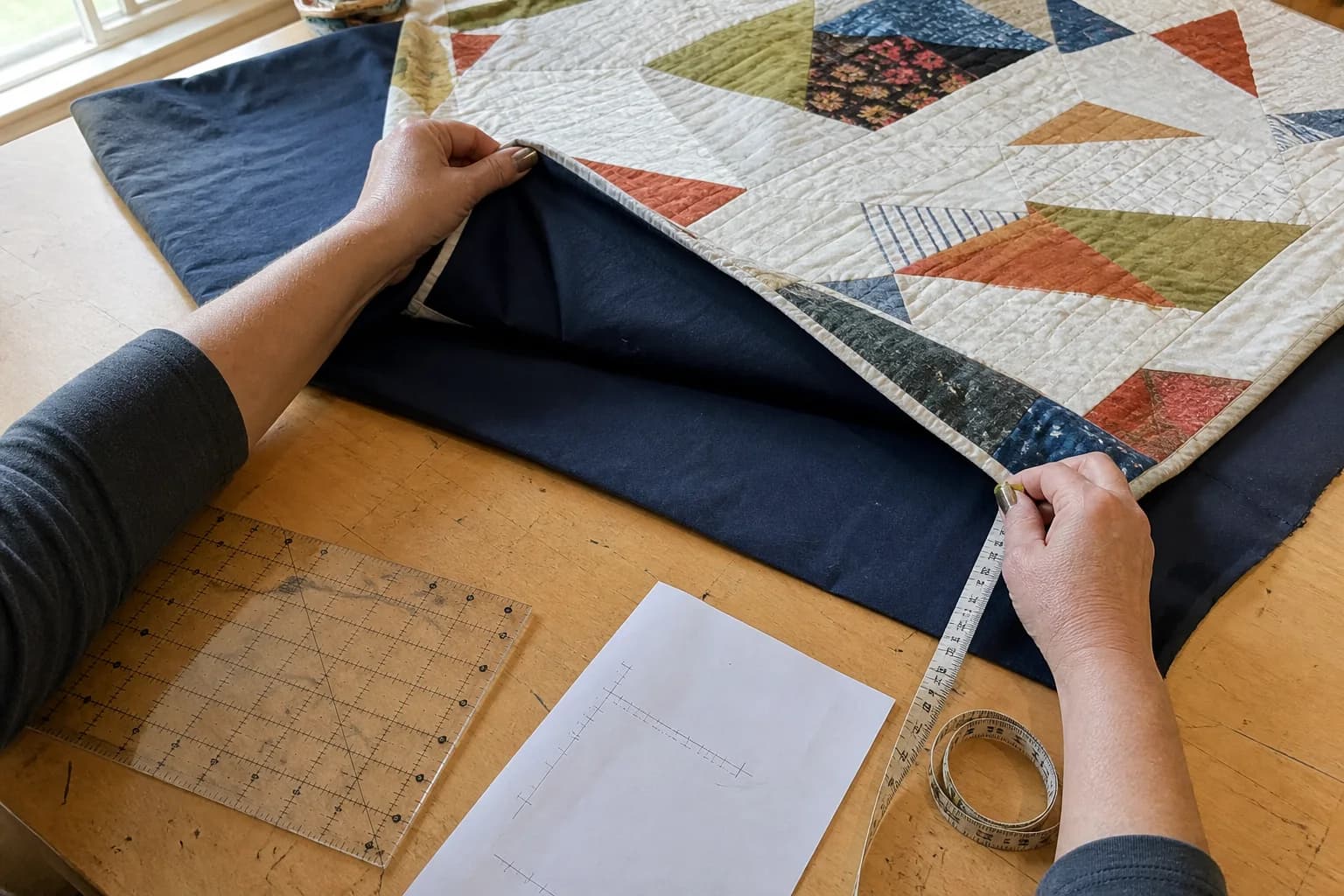
At the cutting table
What to notice first
- Why batting needs extra room
- How to calculate the required rectangle
- How to compare package sizes
- What to confirm before checkout
Batting begins with the finished top
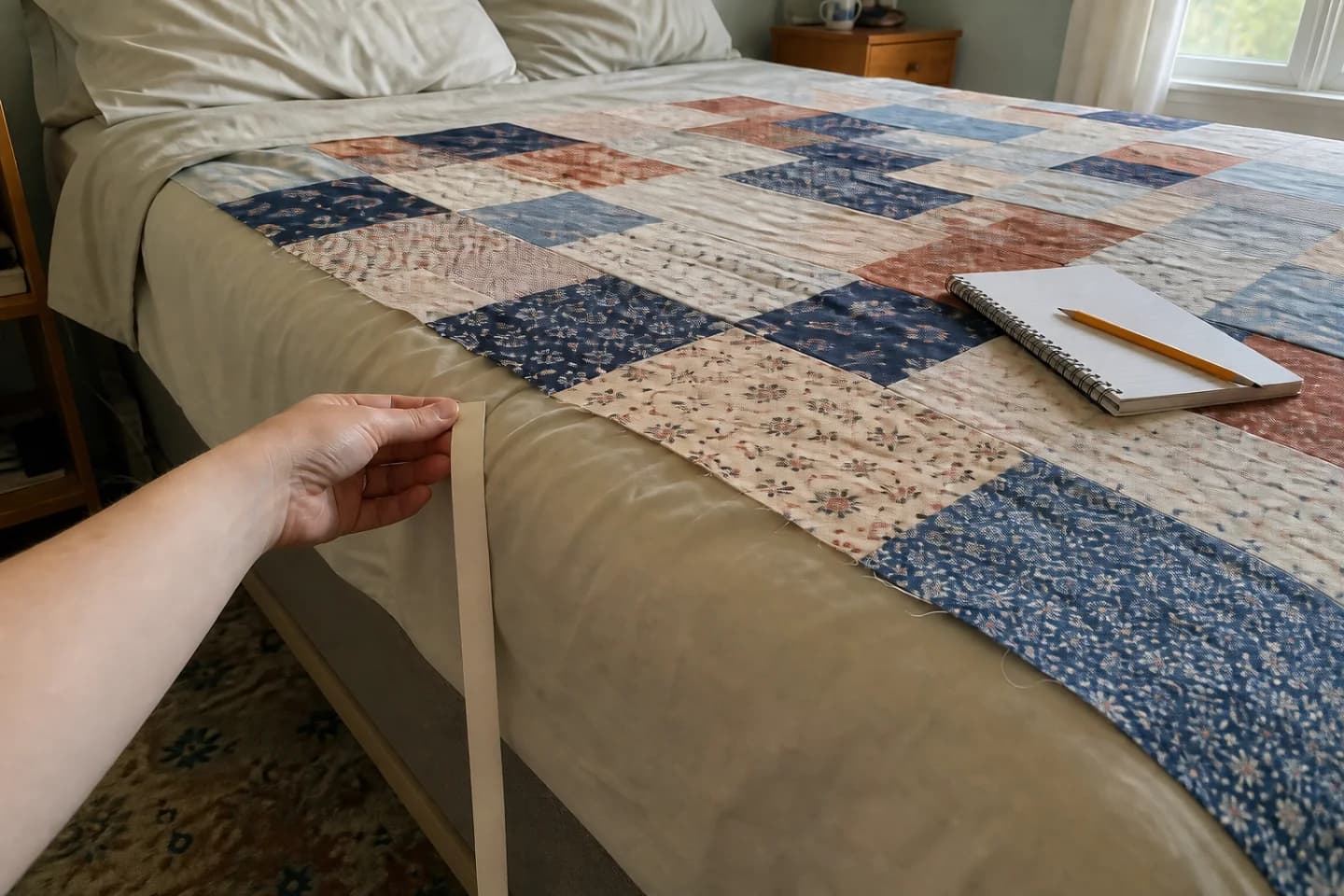
Write down the finished width and finished length of the quilt top. Finished means the dimensions after piecing, not the sum of untrimmed blocks or the size you hoped the top would become. Batting needs to extend beyond that rectangle so there is room to handle and quilt the layers.
The added room is overhang. It belongs on the left and right, and on the top and bottom. That means it is added twice to each dimension. The right amount is a project choice, not a number to copy blindly. A longarmer may specify a minimum; a home-quilter may have a different setup. Get that requirement before a purchase turns into a constraint.
Calculate the rectangle you need
The planning calculation is straightforward: required batting width equals finished quilt width plus twice the chosen overhang. Required batting length equals finished quilt length plus twice the same overhang. Keep the units consistent. If you measure the quilt in inches, compare it with package dimensions in inches, or convert carefully before deciding.
Worked example with visible assumptions
Suppose a finished quilt top measures 60 by 80 inches. For this example, choose 4 inches of overhang on every side. The required batting is 68 by 88 inches: 60 plus 8 for the width, and 80 plus 8 for the length.
- A 72 by 90 inch package covers a 68 by 88 inch requirement.
- A 66 by 90 inch package does not cover it, even though its length is enough.
- Turning the package around cannot solve a dimension that is too short in either direction.
This does not say that 4 inches is right for your quilt. It shows why the assumption must be visible. Enter your own size and overhang in the batting calculator before you compare packages.
Read the package, not just the label
Terms such as crib, throw, twin, queen, and king can help you find a shelf, but package dimensions make the final check. Brands do not all use identical dimensions. A top that is close to a package edge may require a different size once overhang is included.
Also keep the batting's product guidance nearby. Loft, fiber content, quilting-distance guidance, washing advice, and whether the maker permits piecing belong to the batting product, not to general quilt math. A rectangle calculation cannot speak for every batt.
Plan backing and batting together
Backing and batting often use the same finished-top measurements and the same chosen overhang, which makes it sensible to plan them in the same sitting. They are still different purchases. Backing depends on usable fabric width and panel direction. Batting depends on actual package or roll dimensions. One checklist prevents the familiar surprise of having a backing ready and batting that is a little too narrow.
Before you buy
- Measure the finished top in both directions.
- Write the overhang requirement and where it came from.
- Calculate the required batting rectangle.
- Compare both dimensions with the package or roll listing.
- Read the batting maker's guidance if piecing or a particular quilting method is involved.
When the layers are planned, the next material calculation is usually binding. It is based on perimeter, not batting area.
Set the batting aside with the measurement
Once a package covers both dimensions, keep the size note with it until the quilt sandwich is made. It prevents a batt bought for one project from quietly becoming “close enough” for another.
The questions that come up next
Common questions
How much bigger should batting be than the quilt top?
There is no one amount for every project. Add the overhang you have chosen on all four sides, and check a longarmer's requirements when they will quilt it.
Can I buy batting by quilt size name?
A package name is only a starting point. Compare its stated dimensions with your required batting rectangle before you buy.
What if no package covers my required rectangle?
A wider roll or batting pieced according to the batting maker's guidance can be options. The calculator can show the rectangle; it does not replace the product guidance.
Quilt math, without the second-guessing
One short email when a new guide or calculator lands. No sales sequence.
You're agreeing to quilt-math emails from Stitchtale. Unsubscribe any time; this is separate from signing in.